
Organ Works


Hamburg, St. Marien-Dom
Renovation of the Beckerath organ from 1967 | IV/70 (1 Ext.) | 2027
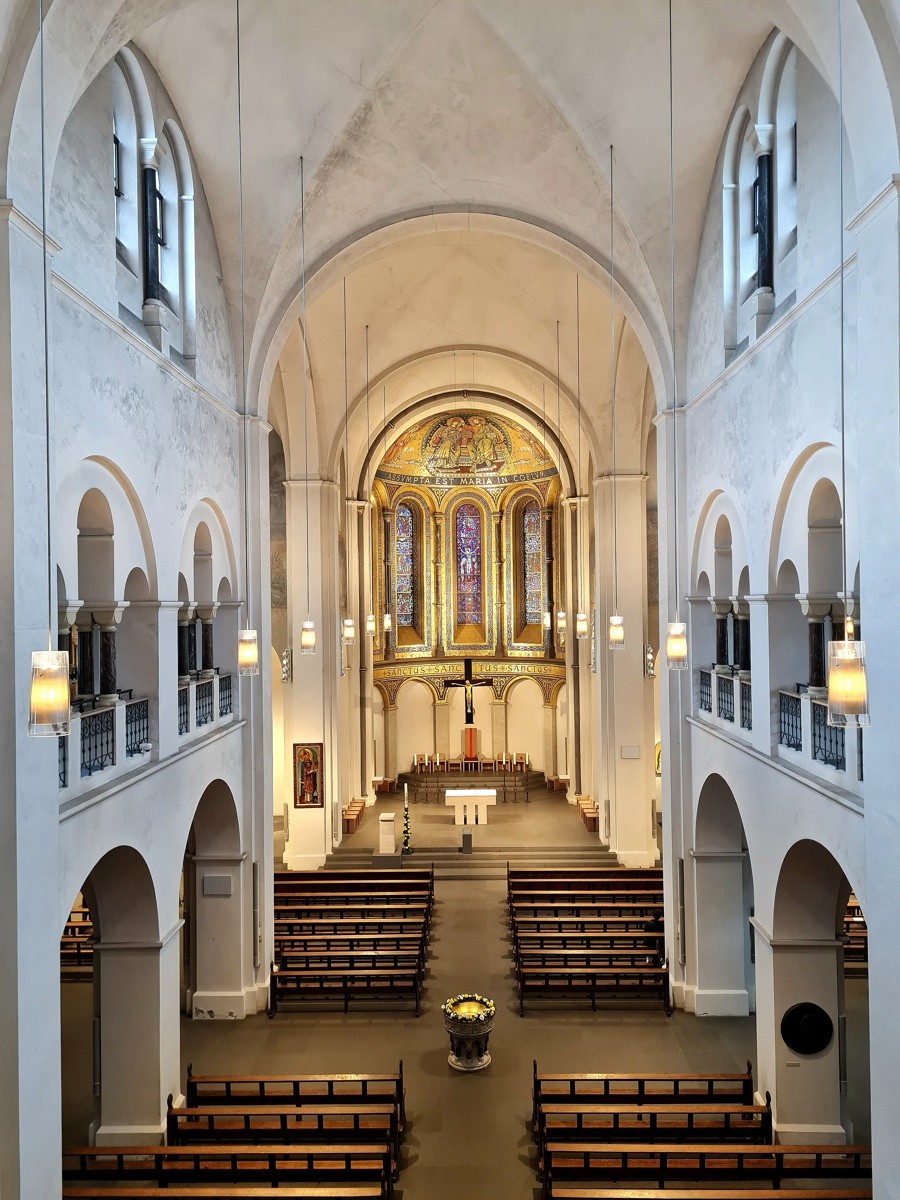
The Mariendom is the cathedral church of the Archdiocese of Hamburg and the spiritual center of North German Catholics in the heart of the Hanseatic city. Since its completion in 1893, the neo-Romanesque building has shaped the cityscape of the St. Georg district. To this day, it is home to a rich church music scene.
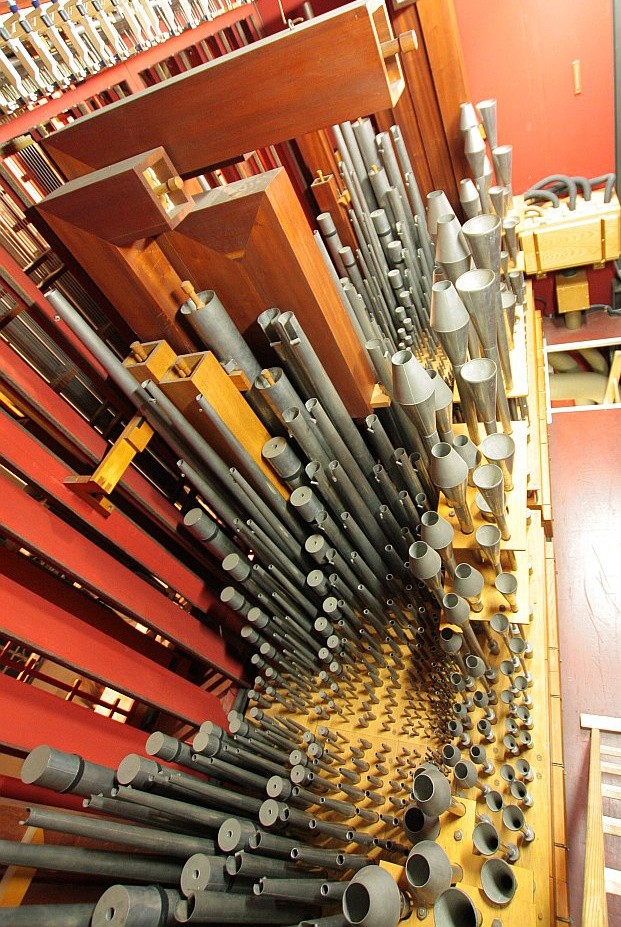
The organ in the rear gallery was built in 1965-67 by Rudolf von Beckerath – an impressive testament to the work of the renowned Hamburg workshop. The builder expanded the instrument during the major church renovation in 2008, adding two 32′ stops and a second swell division (Hinterwerk). The 32′ Fagott was reworked into a 16′ at that time.
After decades of intensive use, technical wear and tear and tonal shortcomings must be remedied in order to make the organ fit for the future. Our goal for the work planned for 2027 is to preserve the substance of the instrument, secure it technically, and at the same time carefully develop it further so that the instrument meets the high liturgical and concert requirements of St. Mary's Cathedral in all respects.
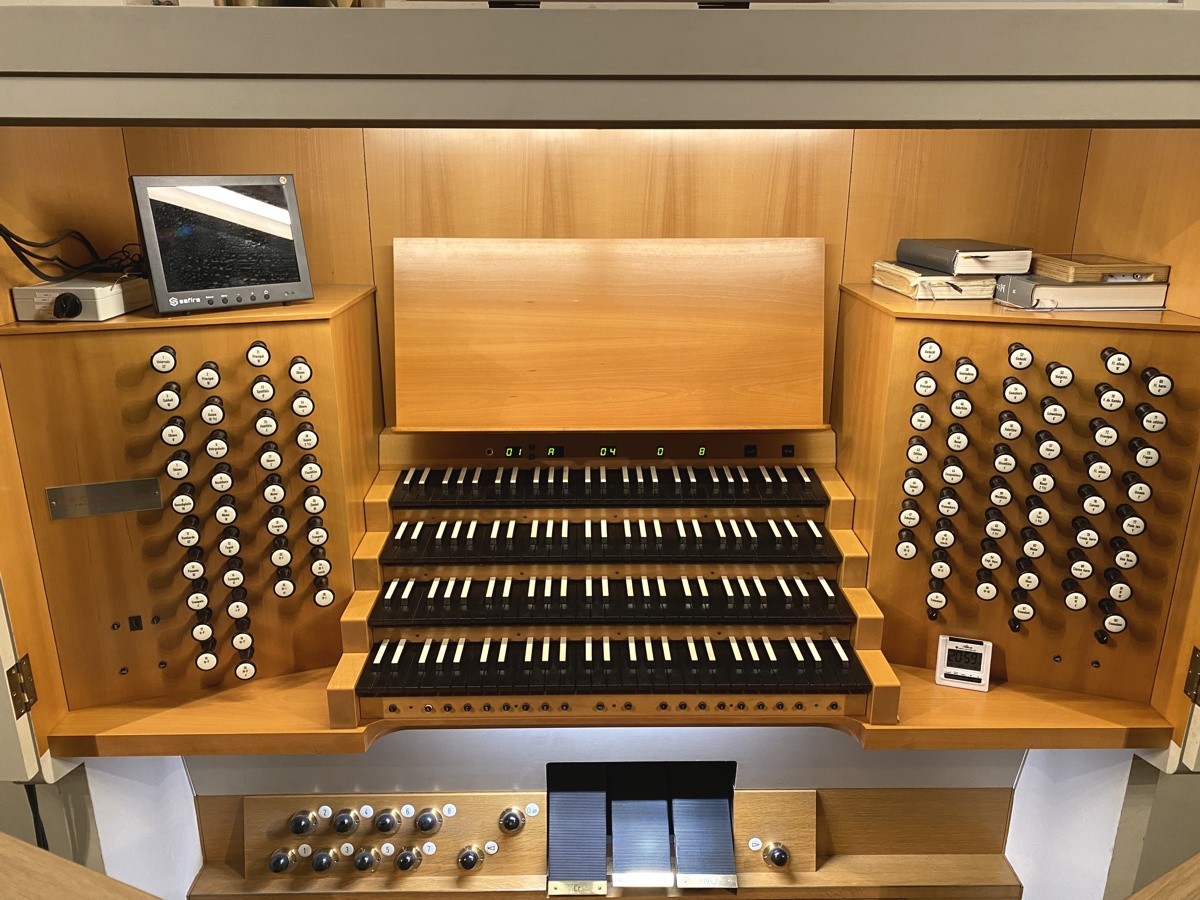
The focus is on thoroughly cleaning and overhauling the entire instrument. In addition, the console will be refurbished and the electrical system secured, and equipped with a new setter system, MIDI control, Bluetooth page-turning function, and a touch display with comprehensive functions. The number of pistons will be reduced and the stop knob switches and labels will be replaced. A height-adjustable organ bench will improve playing ergonomics.
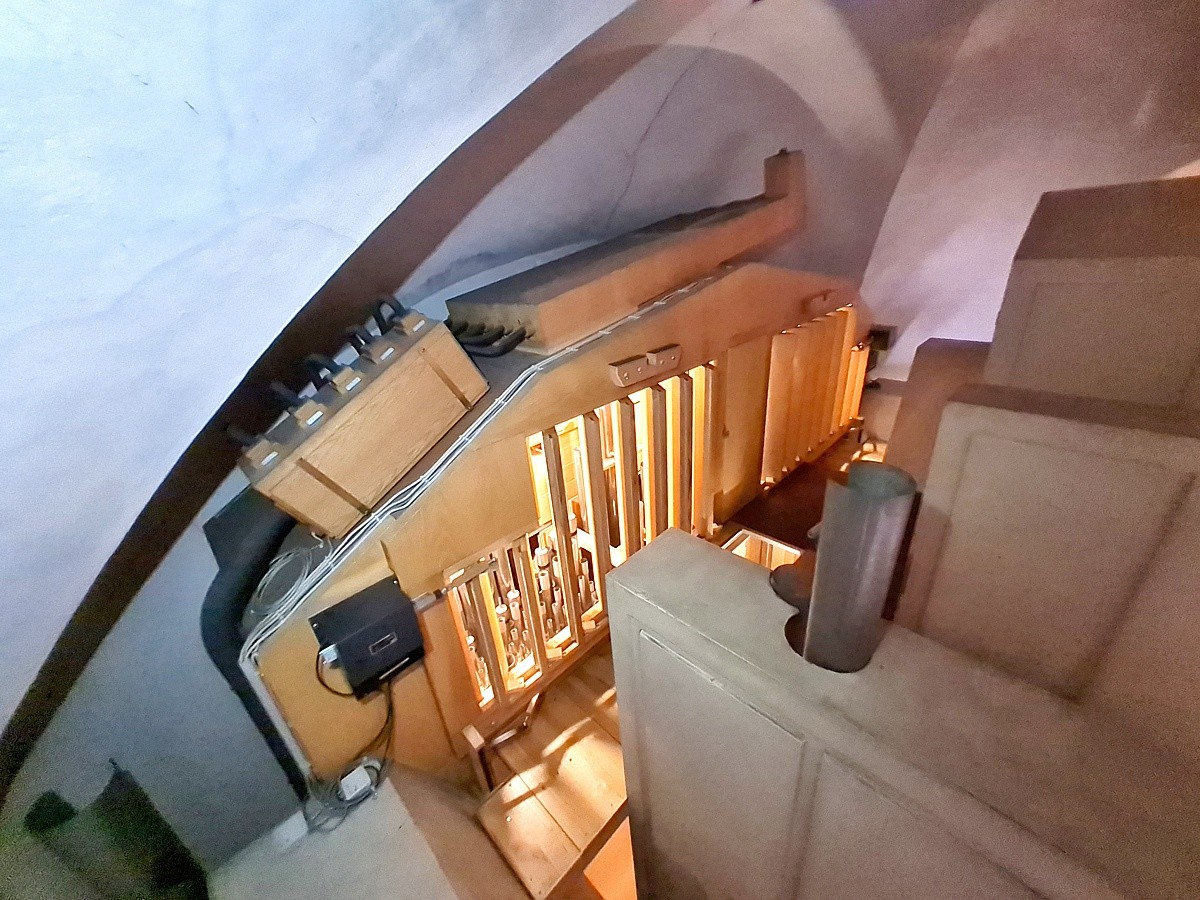
Further optimizations concern the accessibility and ease of maintenance of the internal parts. For the Hauptwerk, Kronwerk and Pedal, we are adding tone valve magnets so that the playing action will then be completely electrically controllable in addition to the mechanical action. The wind chest in the Hinterwerk will be rebuilt with a different arrangement. The Hinterwerk swell box will be fitted with additional maintenance doors, new swell motors, and multiplex and lead plate supports to increase sound insulation. The mechanical key action to the Hinterwerk will be removed.
Special attention is paid to the tonal aspect. While preserving the stylistic characteristics of the instrument, some stops will be sensibly supplemented or reworked. Careful re-intonation will compensate for previous shortcomings. Intensive intonation work will be necessary on the stopped bass voices (32′ + 16′ + 10 2/3′), two mixtures (HW Mx .+ Corn.) and the stops of the Hinterwerk. In five registers, the existing aluminum tuning rings will be removed and the pipes lengthened. While the Cornett will be moved from the Hinterwerk to the Hauptwerk, the Trompette harm. 8′ and Clairon harm. 4′ will be renewed in classic French style with suitable scales. The Flûte harmonique 8′ will also receive new pipes from c° to g3. A new bass extension complements the Trompette harm. 8′ to 16 feet. Subject to space constraints, three additional stops are planned for the Hinterwerk: Basson-Hautbois 8′, Quinte 2 2/3′ and Terz 1 3/5′.
As a new tonal highlight, two new cymbal stars and a Celesta Glockenspiel will provide atmospheric accompaniment to the organ music. In addition, the new high-pressure stop Tuba episcopalis 8′ will fill the bishop's church with festive fanfare sounds.
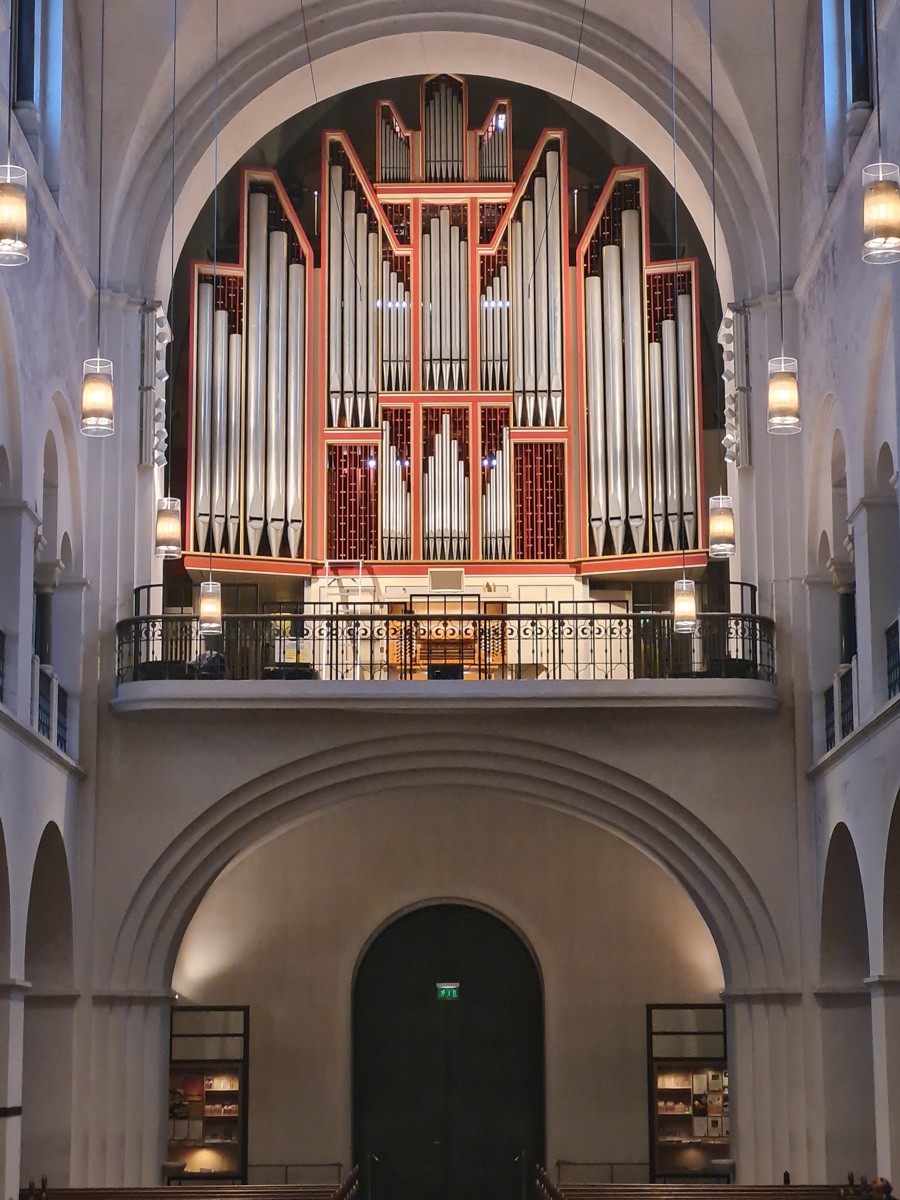
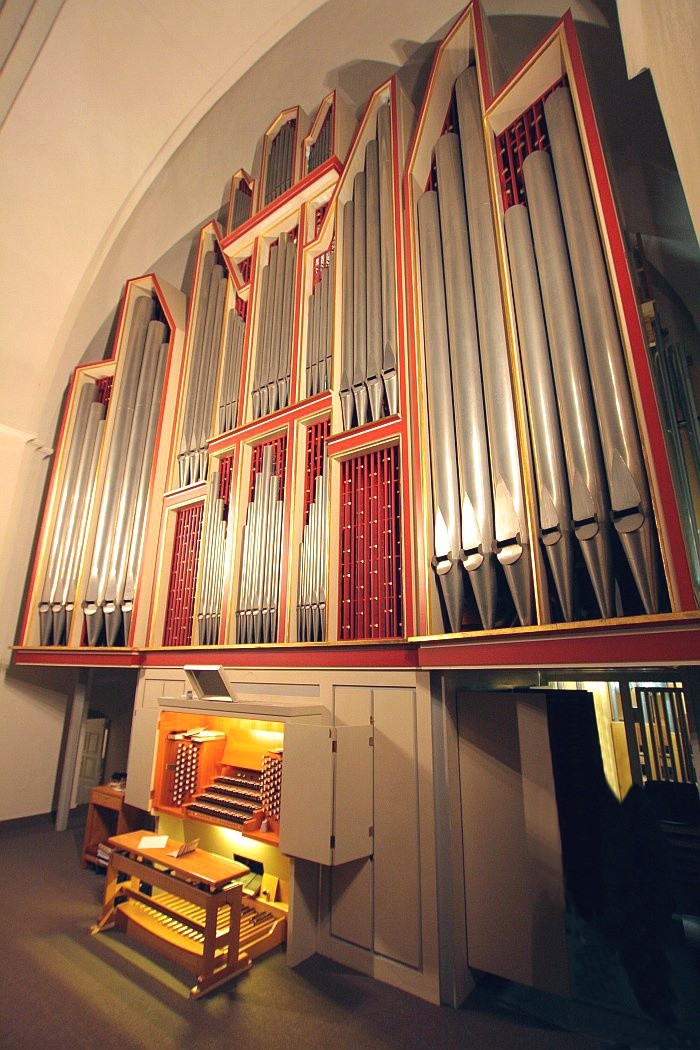
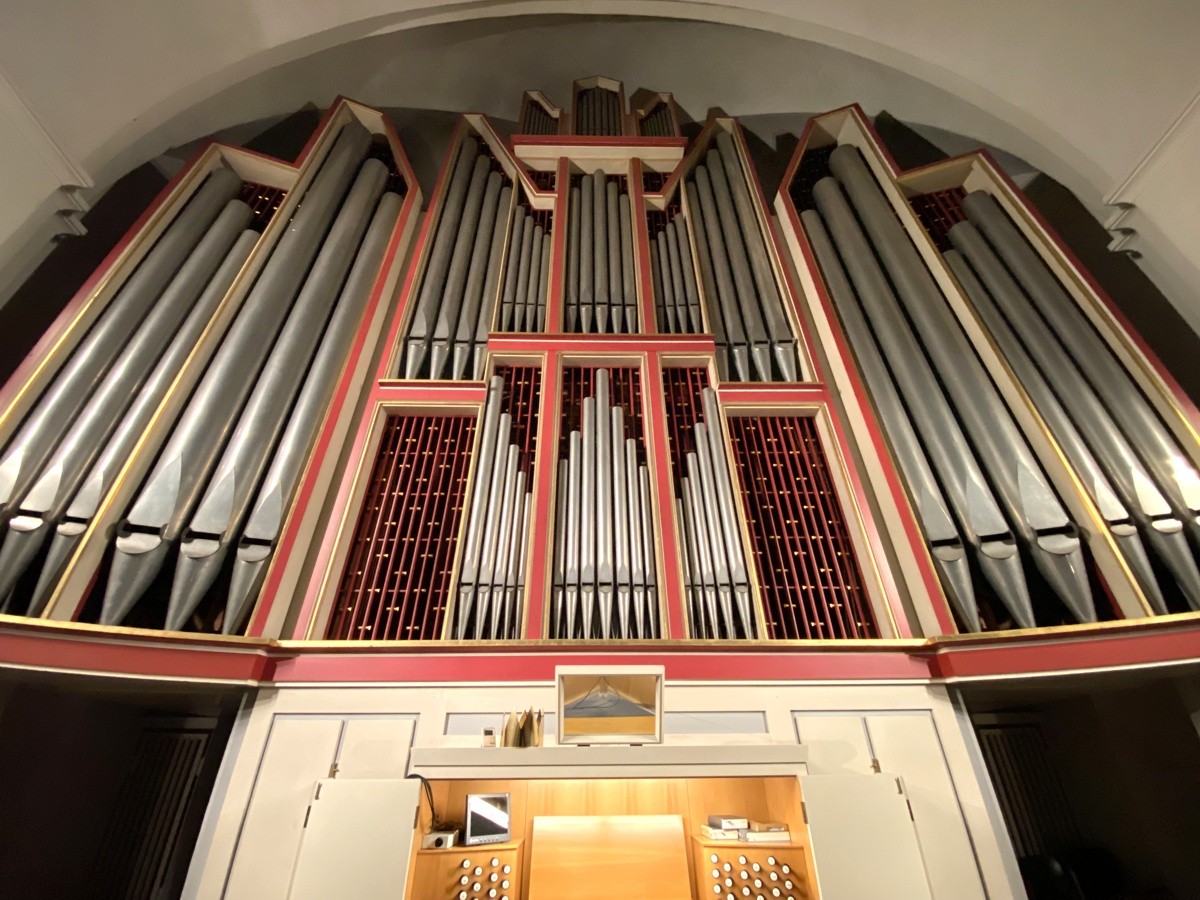
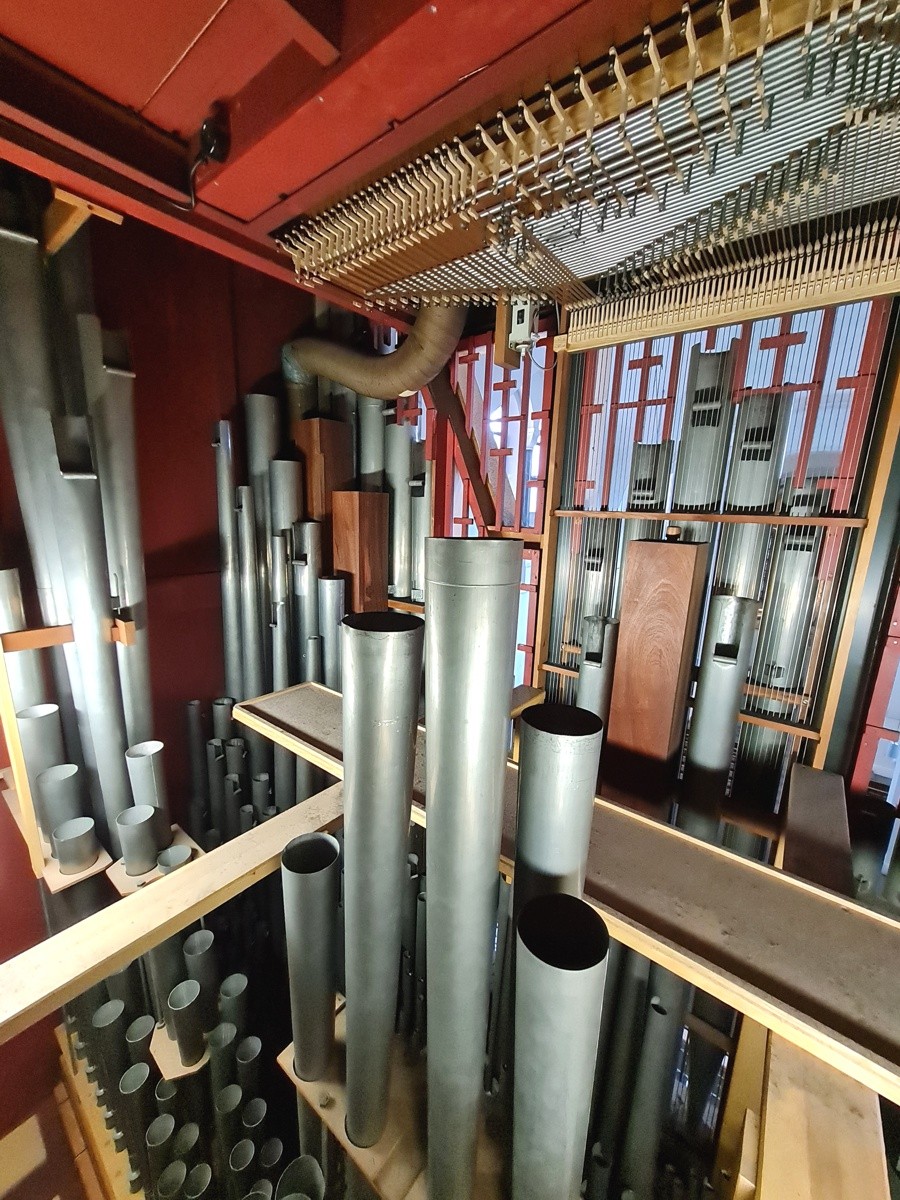
Disposition
I. Hauptwerk C-g3
- Prinzipal 16'
- Oktave 8'
- Spielflöte 8'
- Oktave 4'
- Hohlflöte 4'
- Quinte 2 2/3'
- Oktave 2'
- Flachflöte 2'
- Cornett V (aus Hinterwerk)
- Mixtur VI
- Zimbel III
- Trompete 16'
- Trompete 8'
II-I, III-I (mech./elektr.), IV-I
II. Kronwerk C-g3
- Gedackt 8'
- Quintadena 8'
- Prinzipal 4'
- Rohrflöte 4'
- Oktave 2'
- Nasat 1 1/3'
- Sifflöte 1'
- Sesquialtera II
- Scharf IV
- Krummhorn 8'
- Schalmei 4'
Tremulant
III-II (mech./elektr.), IV-II
III. Schwellwerk C-g3
- Gedackt 16'
- Violprinzipal 8'
- Gemshorn 8'
- Schwebung 8'
- Rohrflöte 8'
- Oktave 4'
- Blockflöte 4'
- Nasat 2 2/3'
- Waldflöte 2'
- Terz 1 3/5'
- Septime 1 1/7'
- Mixtur V
- Englisch Horn 16'
- Oboe 8'
Tremulant
IV-III
IV. Hinterwerk (enclosed) C-g3
- Flûte allemande 16'
- Flûte harmonique 8' (2027 neu ab c°)
- Viola da Gamba 8'
- Voix céleste 8'
- Principal 4'
- Fugara 4'
- Flûte octaviante 4'
- Quinte 2 2/3' (2027 u.V.)
- Octavin 2'
- Tierce 1 3/5' (2027 u.V.)
- Plein jeu V
- Trompette 16' (Extension, 2027 u.V.)
- Trompette harmonique 8' (2027)
- Basson-Hautbois 8' (2027 u.V.)
- Voix humaine 8'
- Clairon harmonique 4' (2027)
Tremulant
IV 16'/4'
Solo (floating, 2027) C-g3
- Tuba episcopalis 8' (Hochdruck, 2027)
- Celesta Glockenspiel (2027)
Zimbelsterne (2027)
Pedal C-f1
- Untersatz 32'
- Prinzipal 16'
- Subbass 16'
- Quinte 10 2/3'
- Oktave 8'
- Rohrgedackt 8'
- Oktave 4'
- Nachthorn 2'
- Rauschpfeife III
- Mixtur IV
- Bombarde 32'
- Posaune 16'
- Fagott 16'
- Trompete 8'
- Trompete 4'
I-P, II-P, III-P, IV-P, IV-P 4'
Schleifladen
mechanische Spieltraktur für I, II, III, P
elektrische Spieltraktur zu IV
elektrische Registertraktur
Setzeranlage und Funktionsmonitor
Registercrescendo
Generalschwelltritt-Funktion
MIDI-Steuerung (elektrische Ansteuerung der Spieltraktur)